Isaiah 40:21-31
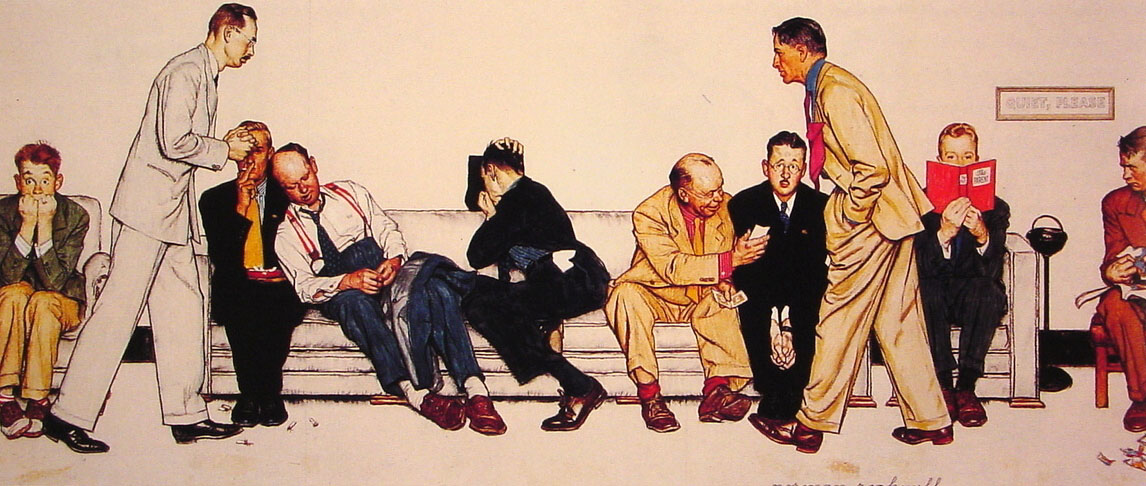
Have you been waiting long?
I'm a poet. I describe stuff.
raspberry_rabbit@yahoo.com
Posted by
Raspberry Rabbit
at
2/05/2015
0
comments
Labels: 500 words on a reading
Prospect
Matthew 5:1-12
You don't get rich by being faithful. We've all known faithful people who remained folks of modest means and frequent sorrows throughout their lives. What does Jesus mean, then, in the Sermon on the Mount when he says that the poor (Luke's version) or the poor in spirit (Matthew's version) are "blessed"?
Jesus must have meant something other than "rich". He speaks to a humble and disenfranchised crowd who know that their economic fortunes are limited and vulnerable to catastrophic change. In the Sermon on the Mount he goes nowhere towards promising them that the blessedness will translate into monthly income, houses or possessions. Jesus intends these words about blessedness as a play on words and a paradox. He, himself, is living as a guest in Peter's house in Capernaum. His first disciples, rather than increasing their family incomes, are all walking away from their livelihoods in order to follow Jesus.
We might be driven to the internet or to to our Greek dictionary to find out what the word "blessed" (makarios) meant when Luke and Matthew used it. With its root makar meaning "extended" or lengthened or increased, it would appear that the blessed ones, the makarioi, are going to have some bigness about them and something - if not earthly riches - in abundance. Lots of it - the full measure, pressed down and overflowing!
But what is it? What is like riches - but not? Or like the earthly harvest of fish, grain and miscellaneous revenue but attractive enough to prompt capable people away from these things? Why do they follow and why do they believe? Do we not marvel a bit at their freedom?
There is no question that the words of Jesus, then and now, access a deep hunger that earthly enterprise with its uncertain and transient blessings will not satisfy. Faith becomes the chief asset in this new economy. The bottom line is blessing - satisfaction that following Jesus has assured our participation in the big world of the Kingdom, the discovery that other followers have become our family and joy that we have discovered a purpose in life beyond carving out an abundant niche for ourselves.
The parables and sayings which follow in the Gospels will further unpack this to a group of new disciples who, from time to time, will waver in their newfound faith.
We shall be attentive!
Posted by
Raspberry Rabbit
at
1/30/2015
0
comments
Labels: 500 words on a reading
We always read this exchange as if the wires were touching. The invitation of God meets the willing and immediate response of the human conversation partner with little resistance, no flash and no mess. We do not read even a moment's silence into the story between the end of the echo of Gabriel's words in whatever dwelling they were spoken and Mary's response - a silence in which both "yes" and "no" remain a possibility. Nor do we read such a pregnant pause into the majority of encounters between God and all the heroic humans of the Bible's stories. At the right side of the painting God speaks through an angel or a prophet. At the left side the object of God's discourse says simply "yes, let it be so".
Posted by
Raspberry Rabbit
at
1/14/2015
0
comments
Labels: 500 words on a reading
"...those who were ready went in with him to the marriage feast; and the door was shut."
Posted by
Raspberry Rabbit
at
11/06/2014
0
comments
Labels: 500 words on a reading
Prospect
Exodus 33:12-23
It's been a tough trek. Stress, anger and uncertainty have been the order of the day. Exhausted, Moses checks in with God. Is it alright? ask Moses. Are we still your people? Even with the incident with the golden calf and the nonstop discord on the people's part? Will you continue to lead us God? Moses receives affirmative answers to all these questions. The whole reading is a bit curious. It even appears that God is tired of being angry. Moses proceeds, at this point, to ask a question of his own - one which is important to him alone and seems almost irrelevant to his role as the leader of this sorry band of Hebrews in the Sinai desert:
I want to see you God. "Show me your glory"The earlier conversation with God is something with which we are all familiar: We lay before God our faults, we lay before him our needs, we struggle to review our situation in such a way (or to change our situation in such a manner) that we can be assured that things are alright. We have some hope for the future. We restore a balance. That is frequently enough. Moses goes further, though. "Show me your glory" he asks.
Posted by
Raspberry Rabbit
at
10/14/2014
0
comments
Labels: 500 words on a reading
Posted by
Raspberry Rabbit
at
10/08/2014
0
comments
Labels: 500 words on a reading
It is mine - says the Master.It is ours - say the tenants.
Posted by
Raspberry Rabbit
at
10/01/2014
0
comments
Labels: 500 words on a reading
Proper 21 - Pentecost 16
Year A
Matthew 21:28-32
In Sunday's Gospel reading Jesus explains that the tax collectors and the prostitutes are getting into heaven before the Pharisees and the Scribes because they have seen the light and changed their ways.
What has candidate X done? Has he read a few more books on the subject? His bright young intern has brought along the latest research on the topic to the morning meeting. Candidate X has talked to his constituents and realized the economic and political consequences of Proposition Ten. His changing opinions have even strained his relations with members of his own party. A good Democrat or a good Republican would be the sort to believe in something like Proposition Ten. Candidate X, though, has changed his mind. He now believes Proposition Ten to be a complete dog. It should be opposed.
Posted by
Raspberry Rabbit
at
9/26/2014
0
comments
Labels: 500 words on a reading
The Old Testament readings from the Book of Exodus have been quite fruitful these last three weeks. This week’s reading is no exception. The topic is the anxiety which the Israelites feel in the midst of their wanderings through the desert after a dramatic escape from Egypt. Moses and Aaron are feeling the full weight of the individual and familial angst. The task of leadership becomes difficult as hitherto forbidden questions begin to be asked: Was the life we led as slaves back in Egypt really that bad? Was there not bread back home - occasionally even meat in the pot? We might die out here in the desert. It could all go so wrong.
Posted by
Raspberry Rabbit
at
9/17/2014
0
comments
Labels: 500 words on a reading
Prospect
Ezekiel 33:7-11
There was a choice of Old Testament readings this Sunday and the Rector’s eye fell upon Ezekiel 33 as somehow being “just the ticket”. Oh, here we go: wickedness, sin and death. Clergy are a jolly lot, aren’t they? As the 10:30 AM services at the Royat chapel kick off again for the year might we suspect that a new era of fiery preaching (in a tasteful Episcopalian mode bien sur ) is about to begin?
Know this, first of all: The passage relates to a growing self-awareness on the part of the people that all is not well with them. The preaching of the prophet in troubled times has hit a nerve. They say “Our transgressions and our sins weigh upon us, and we waste away because of them; how then can we live?”
They have come to believe there is no remedy for what ails them.
God’s question to them - through the words of the prophet Ezekiel - is this: Why should you die in your sins? It is not necessary. It is not the pleasure of God that men and women should find no remedy.
So it usually goes with the people of Israel in their lower moments. Life is Egypt as slaves, life under the occupation of foreign oppressors, life lived with a corrupted religious life or under the leadership of violent and corrupt Kings - it’s just the way it is. It’s their lot in life. They’ve made their beds somewhere along the way and now need to lie in them. Bring on, then, successive and eternal chapters of the same damned thing.
And the question - “why” - well, it’s a child’s question, isn’t it? Our kids ask it from the back seat of the car with the innocence of believing that one can always redraw a picture if it’s no good.
Still, it’s a tantalizing question. The question that God asks the people through the prophet Ezekiel might even nag us. What is it that ties us down to weakness, failure, sin and unhappiness? Do we not know of a better way?
“Why’ does it need to be the way it is?
Posted by
Raspberry Rabbit
at
9/05/2014
0
comments
Labels: 500 words on a reading
Lent 3
Exodus 3:1-15
Matthew 16:21-28
Moses got distracted.

It might have been recommendable to keep to the path. With a comfortable marriage and a looming
inheritance all Moses needed to do, to ensure a comfortable future for himself, was to put one foot in front of the other. He could have meandered into late middle age and a respectable dotage.
A bush suddenly leaps into flame on a distant horizon and the twinkling catches Moses' eye. He utters the fatal words:
"I will turn aside and see this great sight, why the bush is not burnt".
"...whoever would save his life will lose it, and whoever loses his life for my sake will find it"
Posted by
Raspberry Rabbit
at
8/29/2014
0
comments
Labels: 500 words on a reading
Posted by
Raspberry Rabbit
at
7/31/2014
0
comments
Labels: 500 words on a reading
Prospect
Genesis 28:10-19a
Visions belong to spiritual athletes, no? Don’t they properly belong to hermits and cloistered religious, vocational mystics and prayer warriors? Do not these men and women deserve visions because they have succeeded in putting away from themselves the sort of grinding wheels which distract the rest of us?
This Sunday’s Old Testament reading from the Book of Genesis contains just such a vision: A ladder reaches up into heaven and on it the angels of God move up and down. Jacob was one of the Old Testament heroes. It all fits - this saintly man off in a desert. Unlike us, at least. Better than us, probably. The stories leading up to, and following, this vision, however, reveal just what a fractured man Jacob was. He was a thief and a fraud and a coward. He is like the comic-book brother-in-law who plays fast and loose with his business, even family business, and who you can just about tolerate over turkey and green bean casserole at Thanksgiving.
His story in the Book of Genesis will, moreover, do nothing but get worse for a while. Jacob is, however, part of the story of God’s love to his family and to the world which will ultimately share the faith of Abraham’s children and grandchildren. Unbidden and certainly undeserved, God grants him the grace of reminding him what part he plays in the restoration of the world.
You may share no DNA with Jacob’s family and yet he is one of your ancestors in the faith. Read on. God wins over Jacob. The earlier vision comes to bear fruit at the end.
What are the wheels that are grinding for you right now? If your thoughts on Sunday morning were audible whispers what would we all hear? How much family business? How much business business? What about grudges or complaints about what you lack? What renders you insecure? What made you angry this morning?
The life of our worshipping community, the Sunday morning panoply of words, prayers, sermons and songs, the ringing of bells and the elevation of bread and wine in ancient formularies - the midweek fellowship between us - these are moments and occasions of grace. Do not reject those moments when you are seized by some fleeting glimpse of wholeness and beauty and unimagined possibilities. Though the wheel continues to grind - be tender, even with yourself. The vision has a purpose. God can win you over.
Posted by
Raspberry Rabbit
at
7/17/2014
0
comments
Labels: 500 words on a reading
Prospect
Genesis 22:1-14
The reading from Genesis 22 - the Akedah or “Binding of Isaac” - is a deeply disturbing piece of Scripture. The powers-that-be down at Lectionary Central have even graciously provided your Rector with an alternative - should he so desire. It’s from the Book of Jeremiah and I was tempted to use it since, otherwise, that would make two weeks in a row of heart-rending Patriarchal family politics with potential victims (Hagar - Ishmael - Isaac) seemingly put in harm’s way by God and then rescued in the nick of time.
The emphasis in our story this Sunday is that God intervenes once again to preserve life. This is true.
That he first colluded in the expulsion of Hagar and her son Ishmael from Abraham’s camp and that he initially commanded Abraham to sacrifice his son on Mount Moriah is, however, highly problematic. Soren Kierkegaard wrote an entire essay on the Binding of Isaac (Fear and Trembling) in which he retold the story four different times in order to try and unwind the conundrum with only limited success.
Another point of emphasis is that what we have received in this life is all a gift. It all belongs to God. It can be given back. This also is true.
But what of the godly origins of the love which should tie us unequivocally to our children, to our communities and to the vulnerable within them? Is our ethics and our capacity for loyalty something of merely human origins which God would dispense with in the name of religion - as a quotable example of faith?
I must, of course, refuse to spare you from struggling with this text. Jesus points back to the Abraham story. So does St Paul. It contains motifs of faith, obedience and sacrifice which are the building blocks of the Christian faith and cannot simply be expunged in favour of something more uplifting. Explaining it neatly away would be a lie.
I didn’t want to be the sort of clergyman who turns hard readings into pabulum. And so - between now and Sunday - I will struggle to make sense of a difficult text.
Posted by
Raspberry Rabbit
at
6/25/2014
0
comments
Labels: 500 words on a reading
Pentecost 3 - Year A
Proper 7
Genesis 21:8-21
Among the hymns of my childhood was the one where:
God sees the little sparrow fall, It meets his tender view; If God so loves the little birds,I know he loves me too.As a boy I filed this one in the envelope marked "God is very big and can do all sorts of things at the same time" because, while it seemed very good of God to take care of the sparrows of Winnipeg, it was certainly not the BIG STORY which God seemed most concerned about which was obviously the family of Abraham and his descendants - the whole biblical epic which culminated in the ministry of Jesus and then beyond to the evangelization of the world, foreign missions, etc, etc.
pregnant herself and so Hagar and Ishmael, her son by Abraham, are cast out of the camp. The scene in Sunday's reading is poignant: alone and without support, food or water, Hagar lays her boy beneath a tree and retires to a distance so that she will not need to witness the boy’s death. She lifts up her voice and weeps. And God hears her. He points her to the immediate satisfaction of her needs - a well of water - and to a future which had not existed prior to his intervention.
Posted by
Raspberry Rabbit
at
6/21/2014
0
comments
Labels: 500 words on a reading
Pentecost
Acts 2:1-21
How do we change the world? Or do we ever change it? Maybe the world is a big stony thing which just "is" the way it is. We adapt to it. We wiggle around it. At our worst moments we don a pair of rose colored spectacles and delude ourselves about it.
The Day of Pentecost was a world changing moment for the early Church. The manifestations of the Spirit's movement - an audible sound of rushing wind and something like tongues of fire which appeared on the heads of each of the praying disciples - were matched by a change within them as they were suddenly equipped to minister within a world which had not, outwardly speaking, changed at all. Yet threat had now turned immediately to opportunity. The tendency to keep to themselves and protect the centre was now transformed. They turned to the world around them - a field ready for the harvest.
The world may be the way it is but the people who live in it can change.
They can come to themselves. They can undergo transformation. They can repent and be restored. They can renew their commitments. They can have epiphanies.
It is the experience of the Universal Church across the centuries that men and women who have been touched by an experience of God do transform the world around them. Much of what we now take for granted, in terms of structures of care within our societies, began with the spiritual changes which took place in individuals and communities whom God had touched and changed. The stone dropped into the pond made ripples. The wind moved the branches. There was an effect. It is my pastoral experience as a priest of the Church that the stony and immovable world is a very different place when people develop a sense of purpose and develop a capacity to reach out to it in love.
The lives of those Pentecost disciples were rarely easy in the years which followed the events recounted in the Book of Acts.
The world, however, has never been the same.
Posted by
Raspberry Rabbit
at
6/07/2014
0
comments
Labels: 500 words on a reading
Prospect
Acts 1: 6-14
Have you ever been nagged? Has somebody ever asked you more than once to do the very same thing?
The disciples ask Jesus the same question over and over again. Two disciples on their way to Emmaus (Luke 24:21) had mentioned to their mysterious co-traveler how they “had hoped” Jesus would be the one to “redeem Israel”. Here in Acts, gathered together with their Saviour, somebody broaches the subject one last time: “Lord, is this the time when you will restore the Kingdom to Israel”? Behind the question are, of course, the aspirations of a people who have been long oppressed by foreign powers and are warm to the recurrent myth of a political Messiah - a mighty figure like King David - who would put the foreigners out and restore a purified religion to Israel.
Jesus response here in Acts is both a no and a yes. As is so often the case, they have misunderstood the import of Jesus’ work on earth. Their question is narrow and worldly. Israel is a means, after all, and not an end. Will Israel regain political sovereignty or achieve preeminence over its enemies? That is not the point. The power that is promised to the disciples is bigger and better than that. It is altogether different.
It is not, however, a “no”. In the relatively short term, Jesus will redeem Israel’s task and restore, to a remnant, the heart of Israel’s vocation which is to spread the knowledge of God throughout the world. By defeating the Romans? No, in fact, a comprehensive network of Roman roads will be used to spread the Gospel through the words of the witnesses to Christ’s resurrection to the ends of the known world. The Greek language with which the Romans still communicate with vast swaths of their empire will be the means by which the stories of God’s love are extended throughout that world. The friendship of God will be preached to the ends of the earth. It will all work out magnificently.
Much of what we badger God about in our prayers has to do with the restoration of what we think we’ve lost. Might God not prompt us to look beyond a narrow path of unmet needs and recurrent short-term hopes.
It is a bigger and much broader road which the saints have walked.
Posted by
Raspberry Rabbit
at
5/28/2014
0
comments
Labels: 500 words on a reading
Prospect
John 14:15-21
With reference to the wind, the poet Christina Rossetti wrote:
Who has seen the wind?
Neither you nor I.
But when the trees bow down their
heads The wind is passing by.
"...will ask the Father and he will give you another Advocate, to be with you for ever."He ushers in yet another metaphor - that of the Advocate. Here again, we are promised something yet still effectively denied the ability to define things with enough precision to control what will happen. On this Sunday, when we gather as adults and young people at Christ Church to hear the promises of Christ to his people, we might well seek out a word which is clear about what the future will look like for us and for the ones we love best. What are we getting into? What will become of us? What will become of our young people? What Jesus tells us, instead, is that his people will not be alone. God will be present to them in his Spirit. He will intervene for them. He will give them the words to speak when they need them. He will stand between them and the consequence of human sin. He is on their side.
Posted by
Raspberry Rabbit
at
5/22/2014
0
comments
Labels: 500 words on a reading
Prospect
John 14:1-14
There is a bumper sticker I saw once that said “The Bible says it, I believe
it and that settles it”.
There are no fewer than 98 instances of the
verb “to believe” in John’s Gospel. There are invitations,
as in this Sunday’s Gospel, to begin to believe. There are as well,
descriptions of individuals and crowds who had, in fact, come to believe over
the course of the Gospel. Where the bumper sticker seems to be describing
someone who is the way he is and will remain so forever, belief in the New
Testament describes a more dynamic process. People come to believe
because of Jesus. They change their beliefs about God because of
Jesus. They are forever changed because of something Jesus has said
or done. Something has welled up within them in response.
It’s a word we use in common language in a number of
ways: “believing that” something is the case is a very different
thing than “believing
about” or “believing in”. We tend to be a bit
promiscuous about the things we “believe in” - ideas mostly - which we
inherited or have come to believe in as a way of making sense of the world and
identifying ourselves within it. Free Enterprise or Universal Health Care
or the Brotherhood of Man under the Fatherhood of God - things that are “believed
in” tend to sprout capital letters with time. It is perhaps natural
that belief in God or belief in Jesus might be things we file away in the same
envelope. Are these not beliefs which define our families or perhaps,
even, our national communities? From these beliefs “in” something,
certain actions and attitudes will proceed which are consistent with such
beliefs. We would like to be consistent in our beliefs. That may be
why we stick bumper stickers on our cars - just in case something new and
unclassifiable comes into the room and we forget and change our minds.
And there’s the rub. Belief in the Gospel leads
to departures and changes - not the endless reinforcement of old slogans and
the adages we learned at our grandparents’ knees.
Are we flexible enough? Are we open enough to
believe?
Posted by
Raspberry Rabbit
at
5/18/2014
0
comments
Labels: 500 words on a reading
Prospect
Luke 24:13-35
Luke describes events on the road to Emmaus, near Jerusalem, where Jesus broke
bread in the midst of two disciples and opened their minds by his exposition of
the Scriptures. The downcast disciples were heartened by the encounter and went
on their way much improved. A clergy-person might feel tempted to own this
scripture passage.
Word and Sacrament? In the space of an hour or so? It's about us, innit?
Don't we strive to be this sort of "point on the journey" for our
parishioners? Wouldn't it be great if, on next year's Annual Parochial Return,
I was able to report that most our our membership had gone from "Wandering
Uncertainty and Deep Perplexity" (line 6) to "Blessed Assurance,
Expectation and Commitment to Living the Resurrection Life" (line 8)? Alas,
I do not think Saint Luke is plotting out the shape of a perfect church service
or a parish's program year. Yet there is an important point to glean herein.
Jesus is inordinately interested in what the disciples are already talking
about. He asks them about it.: "What are you discussing with each other
while you walk along?" He is more interested in them than we are,
oftentimes, in our own people. Where did we develop the bad habit of treating
the visitor, the new member or the "passer-through" as a bank slate -
a tabula rasa, if you will - upon which we impose the indisputable goodness of
the creeds, the Mass, John 3:16, the happy life of our parish, bells, hymns,
incense or the compelling brown eyes of the Rector?
A shining light of revelation which dismisses human concerns, hopes, griefs,
joys, errors and aspirations and takes them off the table with one sweep of the
arm is a truly limited affair in the Bible. You don't find much of that. Most
of the encounters God has with people are genuine conversations. We already
know that the years of struggle or inner turmoil which precede our own healthy
forward steps are not negated when we do, in fact, step forward. They are a
part of the process. We may be better off afterwards but we are still the
struggling person God met when he or she was still struggling.
He reasoned with us over time. He met us on the road. This is evidence of love
and it made the next part possible.
Posted by
Raspberry Rabbit
at
5/02/2014
0
comments
Labels: 500 words on a reading
Prospect
John 20:1-18
What have you witnessed?
It's the sort of question a police officer or a judge might someday require of you - that you describe, audibly or in writing, the details of what you have seen or heard at a particular time and place. Memories play tricks and entropy takes its toll even on recall. Sometimes it takes the collected memories of a series of witnesses before the real story can be reconstructed or the reliable core of the story can be established.
Know this, though: a small number of disillusioned and failed followers of an itinerant prophet from Nazareth were transformed, in a very short time, into agents of hope. They transformed their world and went on to refashion ours. Resurrection not only "was" something - with reference to God's raising of Christ on the third day - but it "meant" something. We know its reality not only in the collecting of testimonies from the four Evangelists but by the history of what followed.
When you throw a stone into the centre of a pond the ripples travel out to the edges. Truth is spoken to the powerful by humble people who, seemingly, have no fear. The great persecutor of the early church becomes one of its chief apostles and advocates. The boundaries which separate the wealthy from the poor, the Jew from the Gentile, fade away. God has not only raised Christ from the dead, he has raised us as well. This power over death and meaninglessness is extended to the lives which we lead.
What the disciples saw, and heard and touched with their own hands will be the subject at hand this Sunday. That is only the beginning. The Sunday readings between now and the day of Pentecost move into what this unique event means for his followers. Christ in his resurrection is "the first fruits" of a harvest to come. "Christ is risen....and so.....". What has happened now to you (and what will happen in the future) is part of the story.
The invitation to live abundantly has been extended to us as well.
Posted by
Raspberry Rabbit
at
4/17/2014
0
comments
Labels: 500 words on a reading
Prospect
Matthew 26:14-27:66
This Sunday we will distribute the reading of the Passion Narrative of
St Matthew's Gospel amongst various readers. It's not because we can
find no one energetic enough to do the whole thing him/herself. Nor is
it the Rector's latest collectivist plot to distribute work
and privileges across the widest possible community of people. It is
simply a very old tradition that the historical participants in the
Passion of our Lord were people
like us and that we should reflect our own involvement in the story -
even our own implication in the events surrounding the betrayal, the
denial and the crucifixion of Christ.
Odd? A bit of a downer? It has been one of the darker sides of Christian history that we wonder aloud whose fault it was
that Christ was betrayed, denied, rejected and crucified. We divide up
characters into friends and enemies - distribute white hats and black
hats. It was the Romans, it was the High Priest, it was the Jews, it
was Judas. Those whose misfortune it has been, across the years, to be
at odds with an ascendent Church, a Christian prince or at odds with
whichever faction of the Church was doing the choosing found themselves
cast in the role of those deserving punishment from below and from
above.
It has provoked, historically, violence by Protestants against
Catholics, by Catholics against Protestants, by Christian rulers and
ordinary Christian townsmen against Jews, by Crusaders against Muslims -
the list goes on.... Who today would we cast into the role of Christ's
enemy?
The Gospel writers are at pains to express to us how Jesus was
essentially alone at the time of his crucifixion. His mother and St
John are present but the rest of his coterie are soldiers and
thieves. The Galilean Springtime is over. The happy crowds which
accompanied him through the gates of Jerusalem have scattered. Judas
has betrayed him, Peter has denied him. The other disciples are laying
low. The Gospel writers, in the power of the Holy Spirit, look across
the ages at us to let us know that it is human nature which conspired
against God's work and effected these events. The story continues to be
the story of what God has himself done on behalf of a guilty humanity.
It is not the story of a few who were discovered, in the end, to be
virtuous.
And so we take our parts. We are that disciple who betrayed his master
and snuck out into the night. We are that disciple who denied his
Saviour, not once but three times. We are the crowds who were there one
moment and then nowhere to be seen when the fancy struck them. We are
that mid-level Roman bureaucrat who cynically put expediency above
right. It is not them.
There is no them.
It is us.
We are Pilate, Judas and Peter.
We are the crowds.
This Sunday we take our parts.
Posted by
Raspberry Rabbit
at
4/10/2014
0
comments
Labels: 500 words on a reading
Prospect
John 11:1-45
There is a pious legend that Lazarus, after Jesus raised him from the tomb where he'd lain for four days, never smiled again during the thirty years he remained alive on the earth. It had something to do, apparently, with the imprisoned souls he'd seen in Hades while he was there.
The story of Lazarus' rescue from the grave is the final of a list of seven "Signs" which Jesus accomplished in the course of his earthly ministry as John relates it in his Gospel. From the changing of water into wine in the second chapter to the raising of Lazarus in the eleventh, the Gospel is doing the opposite of what we used to do in Primary School when we were small. Our activity was called Show and Tell. We would bring some physical object into the class and then tax our vocabulary and narrative skills by telling the other boys and girls what the thing was. John, in the Prologue, which we are possibly most familiar with from services of Midnight Mass or the end of Nine Lessons and Carols, tells us, right at the beginning, that Jesus is Word, light, power and love.
We have the telling first.
What follows in the Gospel are the signs - the showing that this is indeed so.
We carry the narrative of salvation with us. These are words and stories which we know, if not by heart, then in the back of our minds. Occasionally when reading or referring to a particularly well known Scripture in church on Sunday I see your lips move. I know you know them. In these seven signs, but even more so in the evidence of the testimonies of men and women across the ages, God takes these words and makes them flesh. Water becomes wine, the sick are made whole, the outcast is welcomed in and the impossible task is accomplished.
Posted by
Raspberry Rabbit
at
4/03/2014
0
comments
Labels: 500 words on a reading
Prospect
1st Samuel 16:1-13
Seven sons of Jesse the Bethlehemite are each paraded before the prophet Samuel and no, it appears that none of them is quite right. God himself had told the prophet to anoint, as King, the one that he would point out from among Jesse's sons. The passage from 1st Samuel relates an ongoing interior conversation between God and Samuel as the boys each walk by:
"No, not that one - and not that one. Still no joy - this isn't him either."
Jesse is unaware of Samuel's deeper purpose. He simply presents seven of his eight sons to a visiting prophet - a great man - who has paid them the honor of a visit. Jesse brings out the cream of his crop: strong boys - articulate and presentable. David, the eighth son, could reasonably be kept out of sight in a supporting role. After all, somebody needs to cover the chores and duties of his older brothers. It is this forgotten eighth son who Samuel eventually calls for.
As a group, all three readings for this Sunday take discernment as their theme - either the choice in discerning a forward path or the wisdom in discerning why things work out the way they do. It's Lent: We'd do well to ask ourselves why we make the decisions we do and set the priorities we live by. How do we make decisions for ourselves and for others? How do we listen to God? Do we, in fact, have that many options about how to conduct our lives?
We would be challenged, by this first reading from the Old Testament, to ask ourselves what we do not put on the table when we chart a forward path. What do we discount because of prejudice? What do we forget or neglect to mention because of shame? Our friends and our enemies are both curious about the things we avoid in conversations. Employers will always ask specifically about items we gloss over on our CV. Try as we might to avoid the subject, our parents will always identify the one bit of homework which hasn't been done. That's what's important. That's what piques their interest.
The Old and New Testament are shot through with stories of God doing great things by using, as his starting point, what has been forgotten, neglected, overlooked, avoided, scorned or fibbed about. The raw material for your next step may already be on your person. You shouldn't be surprised to find it in your back pocket..
Posted by
Raspberry Rabbit
at
3/30/2014
0
comments
Labels: 500 words on a reading
Prospect
John 4:5-42
The conversation between Jesus and the Samaritan woman at the well is an unusual conversation.
Jesus is, first of all, not on his home turf. Traveling from Judea in the South to Galilee in the North he could easily have skirted Samaria - as pious travelers frequently did if they were concerned about coming into contact with something or someone which would render them unclean. Jesus takes the short route and ends up in a Samaritan town called Sychar at high noon.
He is out of place - a solitary Jew in a Samaritan village with his disciples gone off on an errand. A woman shows up at noon to draw water at the local well. The woman in the story is also out of place. This is an unusual time for her to be doing this sort of thing. Her contemporaries had all been by the well the cool of the morning. It might indicate someone who was disorganized in her household habits or, as is mostly likely the case, somebody who was sincerely hoping not to bump into anyone she knew. Women talked when they were together at the well. The woman in our story has a chaotic life story. Other women at the well might have talked about her.
Jesus doesn't care that she is a Samaritan. He doesn't even seem completely perplexed by her complicated personal history. He asks her for a drink of water. She rambles on - nervous and bemused at being spoken to by a stranger. She's even prepared to enter into an ecumenical discussion about the differing practices and holy places of the Jews and the Samaritans. Jesus dismisses these bluffs and platitudes as religious nonsense. He proceeds to tell her exactly who she is and who he is and what might ensue should she ever come to her right mind and ask him for the gift of life - summed up in his words about Living Water.
So many of the transforming moments in both the Old and New Testaments occur when the comfortable safety of stable and respectable life is either lost or set aside. The character in a biblical story about transformation is more than likely to be a wanderer, a prisoner, an expatriate, a social outcast or a solitary seeker.
You might not seek such a life for yourself. If it is thrust upon you, however, take heart.
Unaccustomed times and places are putty in God's hands.
Posted by
Raspberry Rabbit
at
3/20/2014
0
comments
Labels: 500 words on a reading

Posted by
Raspberry Rabbit
at
3/05/2014
1 comments
Prospect
Matthew 4:12-23
The broken down houses in the village of Bethsaida at the north end of the Sea of Galilee highlights the loneliness of the place. It's been abandoned for centuries - this town of Andrew and Peter and James and John. Everyone has gone. One of the lonely houses here has been identified as the House of Zebedee the fisherman - marginally bigger and perhaps more prosperous than the neighboring buildings. In fact, one of the loneliest characters in the New Testament must certainly be "old Zebedee" himself in this week's reading from Matthew's Gospel.
Zebedee began his day in a boat by the Sea of Galilee with his two sons James and John. He finished it alone after the two boys stepped out over the gunwales onto the beach and became followers of Jesus. They formed part of a coterie of men and women following Jesus who proved a disruption to their extended families, who broke out of their niches in village hierarchies, who disappointed their parents and who ceased to function within their guilds and syndicates. As such they wasted an education and abandoned whatever promotions they had received to this point. Nothing was ever the same again. Not for them. Not for their families.
They might have been called quitters or splitters or leavers. Someone out there, no doubt, considered them an utter waste of space.
Now old Zebedee has no one to fish with. That's a shame. It's not by accident that the reader feels the poignant loneliness. He could not possibly have been made to understand that his sons had left something good for something better. His boys were simply up and gone.
These opening chapters of the Gospel are about exciting times - Jesus is calling together his band of followers. We are here reminded that we can start again in the midst of life - that the call of Christ comes to those who already have a history - that there are none of us nailed into place.
But every "turning to" is a "turning away" and every "yes" is a "no". How many doors have you shut in your lifetime? And do you regret these departures? In your cleaving to Jesus, in your excitement about his words and your recognition of the compelling part of his character which seemed to call you out directly, were you at all conscious that you were leaving something behind?
Did you hear the door click?
Posted by
Raspberry Rabbit
at
1/23/2014
0
comments
Labels: 500 words on a reading